Thursday, September 15, 2011

Cross Country Meet in Marshall, AK

This year I am assistant Cross Country Coach for a new teacher, Michael who offered to take on the coaching position. The short season is open for students from 4th grade through 12th grade who like running on the muddy roads in the villages. Although I had crutches and the boot-cast during the season, I was able to help out by timing the kids and helping out with practices and events.

Our meet for the elementary and Jr. High was held in Marshall, AK. This is about 100 miles upriver from us. Some of the students had never traveled for a sport before, so I absolutely loved helping them on their first trip out of the village without their family.

Alakanuk had sixteen runners and two of us coaches. We filled three small Cessna 207 planes, but since we were on their schedule, our planes left at different times throughout Friday. We figured we would have Michael take the first five students. Then the next six students were older and more responsible on the second plane. After we made the list of plane-loads, our Principal came up and asked if any siblings were together on the planes. Confused, I checked and told her that no, they were on separate planes. When I asked why she was wondering, she told me that it was a policy to have kids on separate planes in case the terrible event of one going down. In that case a family wouldn't lose more than one child!

I took the last plane out with the last five, seriously impatient kiddos who really thought we'd be on weatherhold and would never make it out of AUK. After school was out and our plane was late due to bad weather in EMO, I enjoyed teasing them when they'd ask what time we were leaving. I'd calmly say, "Oh 7pm?" Since it was only 4:15pm they couldn't stand it, but then before they knew it we were getting called on the VHF radio. Our school janitor Morris loaded us up in the school truck and took us down the short road to the airport. Watching their eager faces when they asked me numerous questions made me feel special to be a part of their new exciting adventure.
Marshall is having lots of road construction between the airport and the village. Since this is upriver and the land is much more hilly, someone told me they are able to get most of that gravel from a pit close by this road.
 
Since vehicles were limited and our kids are tough, we rode in the back of a Ford pick-up truck probably a mile and a half from the airport. The weather was mild, but the dense clouds from the northwest told us rain was coming soon. Most of us sat on suitcases and bags as we jostled down the gravel road. One tiny girl on our team has the nickname "Tweety" because she is small like a little bird. Her small voice commented, "Man, the trees here are soooo fat!"

This is Marshall which was built within the last couple years. The new Alakanuk school will look almost exactly the same, but will be double in size.
I was so excited to be able to hang out with Joshua Cunningham, a friend from my Education program at WSUV! He also teaches 5/6th grade, but at Marshall.

Although, I had had chances to talk with him earlier inside the school, I did not recognize him with all that rain gear on until he walked over to me. He's going to be coming to Alakanuk to see why he should appreciate his new school building. (Honestly, I have no complaints about our current building other than the lack of rooms in our school. It'd be nice to have a staff room and any extra space for tutoring and testing.) I'm excited that Joshua is willing to travel to a different site out on the flat tundra close to the Bering Sea.
 This garbage bag proved to have a couple holes by the time it just completely blew off my foot and I was faced with one soaked muddy boot-cast.

The school is on the North side of the Yukon, overlooking the beautiful various colors of the autumn leaves.
 The elementary ladies take their spots in their lanes marked with rocks.
Elementary boys took third place as a team!
After flying there Friday afternoon, we returned back to Alakanuk in two caravan planes (they fit nine people each) Saturday afternoon. Our school pick-up dropped them all off at their houses and then one tired assistant coach went home to sleep for twelve hours to get ready for another busy week. We are hosting the High School Cross Country Meet this weekend. 

Wednesday, September 14, 2011

Yu'pik Fry Bread

One strong observable aspect of the Yu'pik culture is their willingness to share. Anytime someone makes fry bread, aqutaq (eskimo ice cream), or fish strips (dried salmon), they offer me a piece. Sometimes they'll even come out of their way to come find me to give me a nice fresh piece of fry bread. It is circular, more dense than a doughnut, band it is delicious without any frosting or butter.
 Marilyn, a teacher's aide at our school, and the mother of a student in my class, showed me how to make fried bread-- "aqaleq." I'll need to research the spelling. She use a large bowl and poured an unmeasured amount of flour into it. Then she let me add pancake mix of about a 2:3 ratio (more flour than pancake mix).
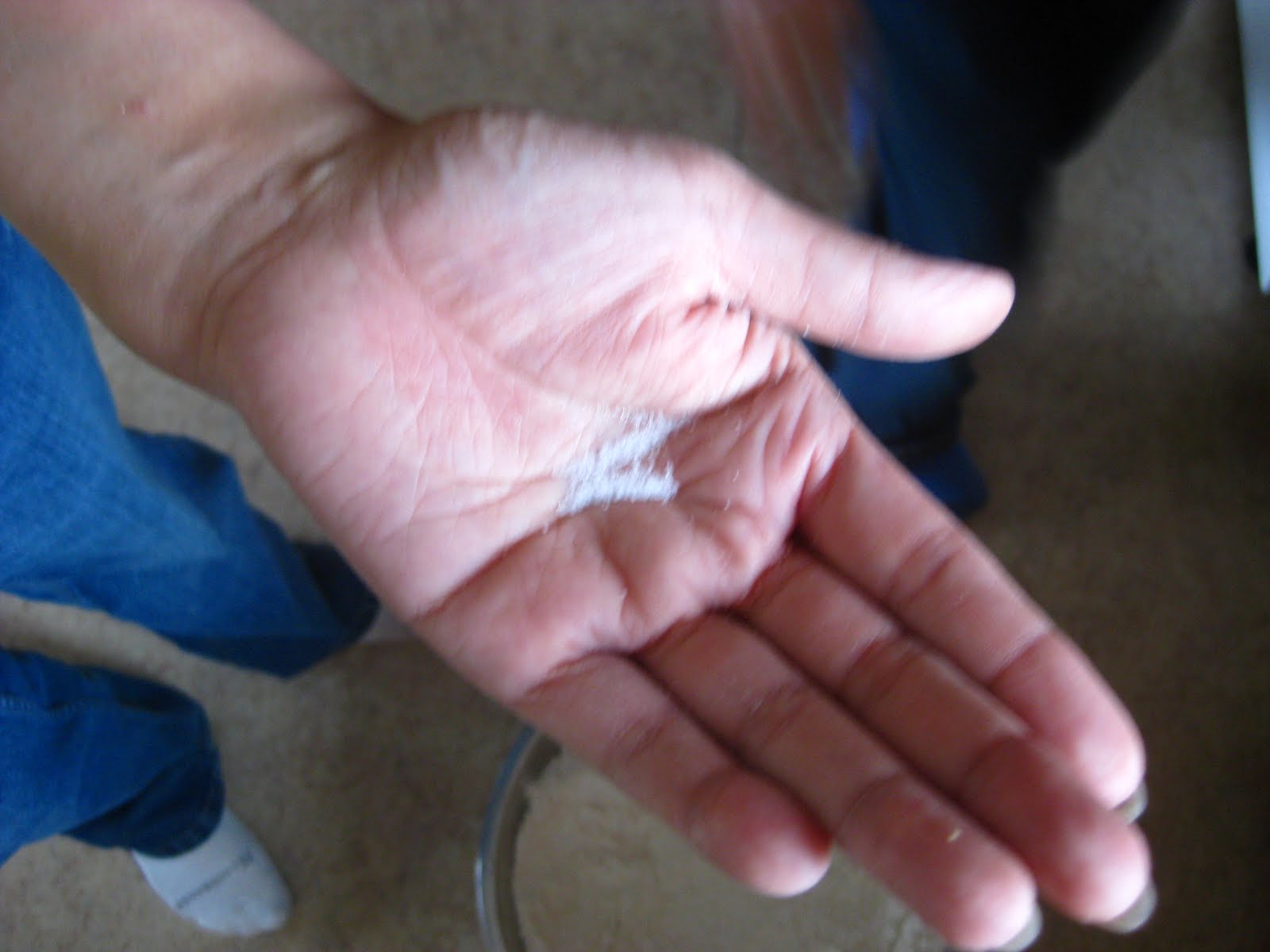
 Add just a tiny bit of salt.
 Marilyn's youngest daughter observes Marilyn makes a well in the middle of her dry ingredients and begins to add her liquids (just like my mom taught me to do when making her famous bread).
 The kids like to watch the ducks in a pond outside their house.
 Marilyn took her aggression out on this dough, adding just enough flour to make it so it wasn't sticky anymore.
 After taking a good handful of dough, she showed me how to roll mine up, stretch it out carefully, and poke a pentagon with a center hole with our fingers. Mine were lumpy and uneven at first, but with her encouraging words, my circles looked more like hers after a while.
 She lays them around the edge of the bowl to let them rise one more time before frying them. She starts at one end and fries them in a counterclockwise manner. This way she can keep track of which ones have been raising longer. Then she started putting them in the pot of vegetable oil based on which one she had rolled first.
 Once the holes get just a tad darker than this, we flip it over to fry the other side.
 I had a couple minor splashes in the process, but I learned quickly how to handle the tongs to the bread wouldn't slip off. Good thing, because I don't need to get anyone hurt from the hot oil.
 These were lain at an angle in a cardboard box to dry. I dipped a hot fresh aqaleq into honey to try their family treat. They were just right.
Thank you, Marilyn for opening up your home to me so I could learn how to make traditional Yupik fried bread. This is a skill that I hope I always remember so I will be able to pass this on to others.


Below: The sunset that night from the slough, looking toward AVEC and the Tribal Council (NW).

Monday, September 12, 2011

Alakanuk from Air


This is the airport we use right now, while the new one is still being built. The village is behind it.


This is what the construction for the new school looks like right now. They have to ship in the gravel from Nome which takes about 18 hours by barge.

Sunday, August 28, 2011

Seal Hunting 2011

When I got a text from Steph asking if I'd like to go seal hunting, I was in the middle of coaching the elementary and Jr. High students for cross country. I called her right away, and asked her when they were leaving. I finished the cross country practice as quickly as I could and rushed as fast as I could using my crutches, rolling my office chair, hopping, and crawling. On the way home, I saw a student and promised him a granola bar on Monday if he'd carry my heavy backpack to my house. Next thing I knew, Steph was pulling up on her Honda four-wheeler to pick me up. She was so willing to help me to get my Carhartts and Muckboots so I could go along with them.

There is something about heading out on the boat that just makes me feel like I'm "one of the gang." This is only my second time going out on the boat to go seal hunting, but I feel right at home when we pull up to get gas and casually chat with others on their boats. The people on the other boats are parents of students, students from my class, their siblings, Natural Helper high-school students, or others from the community most of whom I have met previously.  The biting breeze, smooth open water, dark clouds, and light-hearted joking seem to be a norm for seal hunting.

This time, we only saw a few maklaks (bearded seal), and chased them with a couple other boats before losing them. It tends to be a fun, but no-stress sport. We all watch for maklak to "pohuq" (pop-up out of the water-- I need to check spelling!). When one does, someone hollers and points to it. The seal usually stays up for a few seconds trying to catch its breath. At that point, if a boat is close enough to it, they'll crank on the throttle of the boat and speed towards it. Someone in the boat tries to throw a spear at it. The seal can sense some danger. With one swift movement, it exposes its back above the surface to gain momentum and dive down. About five minutes later it will pop up about 100-200 feet away, but sometimes it is able to swim further away or stay down long enough to escape the spear.

Dylani has such a creative mind! We couldn't help but be entertained by her sweet silliness all evening.
Looking off the side of the boat, where Bummer's harpoon rests.

Bummer, Steph, and Theresa waiting intently to see the maklak surface again.
We stopped across the Yukon from Nunam Iqua to break for some seal ribs.
This piece of drift wood had a complete turn in it. I loved it so much, Theresa asked if I wanted to take it home and hang it on the wall in the living room. (Earlier, we had been talking about displaying my spear once I'm done making it.)

Fun mother-daughter time.
Bummer, preparing the delicious seal ribs over the fire.
This little ball was found amidst piles of dried black root on the tundra. Bummer told us that he and his brothers used to find the little balls and open them up. If they were moist, they'd eat the sweet substance. I found a few I could eat. When my teeth would cut through it, it tasted and almost felt like tiny bits of coconut.


I had heard from some kassaqs (non-natives) that seal meat was really rich, gamey, and not the best. However, I really liked it! It probably had a texture closer to liver? But, thick and tasty. Since it is so dark, I bet it has a high iron content. I would definitely eat it again soon if I could.
A typical view of other boats also chasing the maklak.


This boat is speeding off to follow a maklak. One guys boat was from Russian Mission. They had boated about 4 hours to come camp and hunt. It sounds like people from upriver mostly use harpoons and don't really use spears at all. Someone joked that, that's why they had a fast motor on their boat, because they needed some help since they don't use spears. I'm not completely sure of the difference, but I think a harpoon is a little bigger, is hand thrown, and has a couple flotation devices on the back. It does not require the nuqaq (wood piece held by the hand) used to guide the spear and make the throw more powerful.
Dylani is holding the nuqaq in her right hand and the end of the spear is loosely laying in place. When she throws the spear she also follows through with the nuqaq to increase the strength of her throw.

This is a younger brother of one of my students in my class. He is wearing one of the classic life-jackets that sport the motto, "Kids don't float." It is a program sponsored by the Alaska Department of Health and Social Services.


For those of you who like to watch Alaska State Troopers, this is the boat that is used by the couple troopers based out of Emmonak. They check up on us fairly often and they are great with the students.