Wednesday, August 10, 2011

North to Alaska-- again!

A summer filled with family, friends, and travels comes to an end tomorrow. I look forward to starting a new school year, meeting new friends who will also call Alakanuk home, and trusting that God will lead me through this next year. This year will be a completely new experience-- by being able to build on relationships established in the village last year and by giving me opportunity to bring new experiences and goals to the classroom. The best part of going back up to work in Alakanuk, is that so many things are already in place. My classroom is mostly set up, my room is in order, and I am familiar with the surroundings and culture. I know what to expect this year. Now, I get to build on that.

Over the summer, I wanted to reflect and find ways to improve after my first year teaching. I found it necessary to think of how to improve our reading program, how to create incentives for better behavior and responsibility, how to make learning even more exciting and long-lasting for the students, how to better communicate with the parents about their child's learning, and also how to create an efficient schedule and tracking system. While these thoughts swirled in my mind all summer, my excitement for reuniting with my students increased. (More to come...)
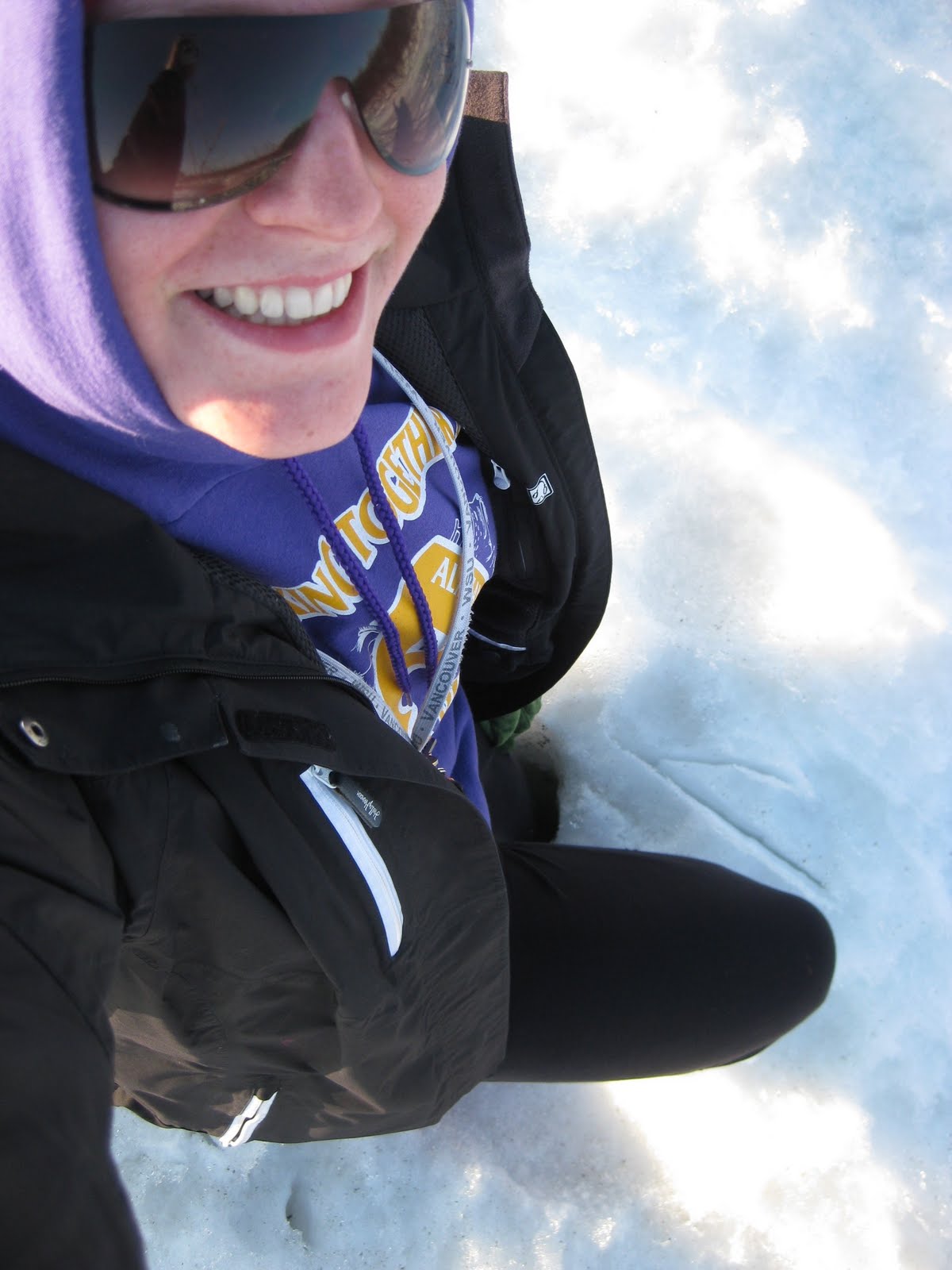
 This picture was from a couple weeks ago, but getting prepared for AK is a little bit more of a task when it involves having a cast. I still have two and a half weeks before I can put any weight on it.


Thursday, July 21, 2011

Migrating South for the Summer


At the end of May, when I returned to my hometown area of Winlock, Washington, I thought the adjustment would be easier than at Christmas, but I still had quite a shock.

People typically say that going back to your homeplace at Christmas after working in the bush is shocking. In 5 months you become accustomed to a completely new way of life and climate. I remember landing in Seattle in December, then sitting in a car on a freeway with so many green trees!

Supermarkets explode with colorful fruit displays, ceilings of stores are tall and spacious, and there are so many different races of people living such different types of lives within one general location. So acclimating to my old way of life took a few days, but before long I was at the end of my Christmas vacation zipping around in a car, grabbing my hot eggnog latte and laughing with friends like old times. So next time coming back to Washington can't possibly be quite as shocking... right?

Wrong. It was about the same shocking experience all over again. In the late winter and spring months, I started using my new snowmachine to get to the stores and other villages. My tongue picked up more of the "village English" which consists of more of a Yupik way of telling stories, a different way of structuring sentences, short phrases used frequently, a certain intonation of the voice while talking, and a more select separate bank of vocabulary. Suddenly I found it strange that I felt awkward in a place that I call my true home-- my own comfort zone.

Some mannerisms from living in Alakanuk got engrained into my everyday routine. They stuck with me for a couple days which sometimes caused a little confusion or a laugh.

For example, my dad asked me a simple question like, "Are you hungry? Do you want to get something to eat on our way home?" and I answered yes. A few seconds later I furrowed my brow at him wondering why he was still staring at me directly in my eyes. He repeated, somewhat exasperated, "Do you want to get something to eat?" I said, "I answered! Oh wait, I'm so sorry. I must have raised my eyebrows and not said anything. Yes, I'd love to stop somewhere to eat!" After living with Yupiks for so long who often forgo a verbal "yes" for an eyebrow raise, I had gotten used to also becoming quiet and opting for an eyebrow lift when answering questions.

After sleeping off some exhaustion from traveling, I woke up to go visit my aunt who was having chemo in Portland. As I was leaving, I thought to myself, "What's the weather like?" so I could properly choose my face protection. Then I remembered I was driving a car, so most likely goggles and a wind-proof balaclava wouldn't be quite so appropriate. I grabbed my drivers license (people need those???) and headed out. As I was getting on the freeway, I had an instant panicking thought to check the gas gauge because Portland was at least 60 miles away and I didn't know how many miles had been driven on this tank, etc. Then I had to remind myself again, "Okay. Not my snowmachine. Cars have larger tanks AND there are gas stations along the way. And if I need food or water there are plenty of places available."

After being in Washington and traveling around, I am grateful to have the experience of living and teaching in the bush of Alaska. There are many advantages that make me sincerely love the people I live with and the area they have introduced me to. Often this summer, I have looked at my pictures of the wide Yukon, the sparkling snow, and at the people with rich hearts I have gotten to know. It is a distinct culture with practiced ancient traditions, loving people, and unfortunately also much anguish. Although I'm not sure of the exact purpose for God leading me to the Arctic Tundra, I know I'm blessed from it. I look forward to going back.

Tuesday, May 31, 2011

Cultural Week

Towards the end of the school year, our school turned into workshop central with cultural activities in each room. Through the chaos of scheduling fiascoes, the students ended up gaining a taste of some knowledge passed down from Yupik elders. Although there wasn't always an elder present in the workshop, students, classroom aides, volunteers, elders, and people hired from the community combined their skills to have students work on projects such as spears, spear throwers, dance fans, dance belts, fish traps, and manaqs (fishing poles).

I learned the length of a spear should be from the elbow of one arm to the tip of your finger on the other arm.
After it is cut to the proper length, a plane is used to carve the square wood into a cylinder. "Plane and turn, plane and turn, plane and turn." Every one of us was silent, sweating, and concentrating for a few hours steady.
After it is nicely rounded, you can use the wood shavings as sand paper to make it smoother. Then a cut metal pipe is pounded over the front end of the spear as a weight. Lastly, a hemisphere is carved out of the back end and feathers are tied to allow the spear to guide through the air. I used swan feathers dipped in ink that I had found in my classroom. Bummer cut them to be shorter and fancier for my custom spear.One of our other tasks was to create dance fans. Male dance fans are larger and look similar to bear paws while they dance. Female dance fans only have two finger holes and are smaller. When we arrived at the workshop, there were only patterns for male dance fans. I came up with a pattern using a compass for the girls to make dance fans that would comfortably fit their fingers.


They play a game called Lapp Game which is very similar to baseball. It is typically played on the ice with a softball-sized leather/rubbery ball. I had never seen the game, so my class taught the kindergarten class and me how to play. The students decided to split up girls against boys-- one team in the outfield and one team lined up to bat. After they hit the ball, their goal was to make it down to the other side through the outfielders and back without getting hit with the ball. Technically you could imagine it like baseball with a home base and one other base. I liked how many runners can run at the same time and how there is only one out before the sides switch so it tends to be a little more exciting and engaging than baseball.

At the end of the cultural days, a few drummers played for the students and an eskimo dance was held in the gym. It was a fun end to an exhausting, yet enlightening set of days!

Monday, May 23, 2011

Field trip to the Yukon Cafe


Our class won the school-wide reading race, which means our class brought in the most paper cars signed by a parent stating their child read 15-20 minutes each night. The prize were pizzas and pop. Instead of having the pizza picked up for us, we walked about a mile to the Yukon Cafe. Only half of our group could fit in the restaurant at the two small tables, so the rest sat on the steps. Thirteen students, our classroom aide, and our Elder enjoyed the sun on our faces and steamy pizza.
Most houses are raised up at least a few feet due to the flooding that occurs each year as the river breaks up. (When I flew out of the village Saturday, the slough was breaking up, but the Yukon was still in tact. Now there is some flooding and the river is partially open.)


The "bunny shadow."

Tuesday, May 17, 2011

After the Midnight Sun

You'd like a little sun? I'd like a little darkness... It is 10:30 p.m. and the sun is proudly shining up in the sky. This evening has some overcast clouds to cool the burning 51 degree day. It feels like it should be about 4 or 5 p.m. and my body is taking a beating. I've found that every day the sun hangs in the air for another 6 or 7 minutes, I rapidly become an involuntary insomniac. Even with tin foil and duct tape covering my window, the light finds its way in.

Lately the sun has been rising a little before 6 a.m. and setting around midnight. I was always so intrigued from hearing stories of the midnight sun in Norway. Now I can say in December I've experienced walking to lunch in the dark only to walk home from work in the dark. So quickly the season changed from many hours of darkness to a superfluous amount of light.
Although at night it seems hard to shut your body down, I welcome the warm rays and the birds in song. With just a few days to go, I feel as if I'm at the end of a vacation-- soaking in my experience here in Alakanuk. I went for a walk the other night, after midnight. And giddy with my camera, I decided not to hurry. I simply enjoyed.

It is common to hear snowmachines "brapping" through the water- their owners hoping to make it to where they are going without going in too deep of water. On this walk, as I was videoing a snowmachine about ready to fly down the slough quickly while hitting deep pockets of water and spraying the air with droplets, the snowmachine died. I squinted in the distance and could see a person trudging through water, slush, and ice to get to the shore. A couple minutes later, a man walked across the slough in a different spot, hopped on his snowmachine, and went to rescue the first guy. I was nervous that they might both get stuck, but a few minutes later both were sitting one machine while the other was pulled with a tow rope flying down the slough quickly, spraying the air behind them with droplets.


Pictures from last week

This was taken out my classroom window at 12:30a.m. after Prom

The sun shining intensely into my classroom at about 10:30 p.m.

Tuesday, May 10, 2011

"Break up"

The Alakanuk Slough, about a ten-second walk from my house.

"Freeze-up" and "Break-up" have been added to my vocabulary since I moved to Alakanuk.

Freeze-up and Break-up are major events. Freeze-up refers to the time that the Yukon River starts to turn itself into a very needed highway. This started happening around October. I loved walking to the dock and hearing the shattering tinkle of the ice below my feet on the shore, while the boats returned from hunting Mukluks (bearded seal) and other types of seal. The boats charged through floating ice, revving their engines if they got caught. In my class, the students would imitate their dads "brapping" the engine to toss the bow of the boat into the air to come down and smack the ice with the sharp aluminum edge.

During Freeze-up or Break-up, there are a few times that are almost impossible to cross the slough or river. Some people live on the other side, causing them to skip a few days of school or work since people can't boat or use a Ski-doo.


As the weather warms, the beautifully colored rocks are exposed as the snow melts. Swan, geese, and cranes soar into the area filling the air with their unique calls. People continue to push the limits on their semi-amphibious Ski-doos as they strive for good hunting and manaqing (there have been a lot of "Ci" fish downriver by Nunam Iqua).

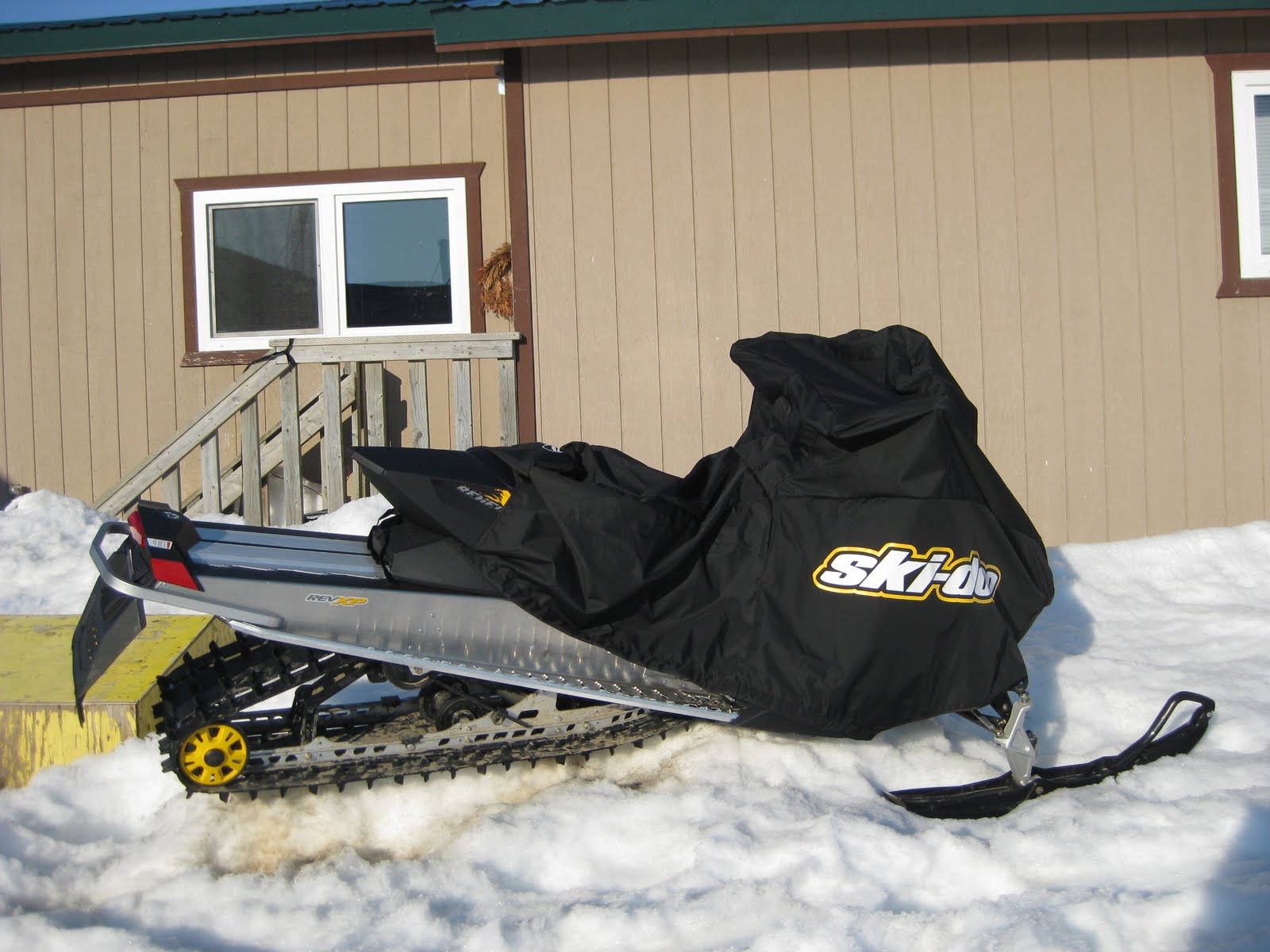
Some say the river becomes unstable for awhile, but then it drains and the couple feet of ice rises and riding becomes safe again. I'll be honest and admit my snowmachine has sat in the same spot by my doghouse for a couple weeks now. I would go out on it, but not unless I had someone to follow who knew where it was safe to go.

As of this morning, Russian Mission's ice floated away and they have a free flowing river again. I have been curious to see how long ours will last. Some people think it will be many weeks, but I predict it will go just a day or two after we leave. However, I am the furthest away from an expert because I have no past experience and the only insight I have are the past dates of Alakanuk break-ups.

Here is a website you can follow the river reports. National Weather Service, Alaska
For more details of predictions and average break-up dates, click "Breakup Outlook" then "Breakup Summary."
However, I watched as they updated from 8am this morning to 3pm and they don't have Russian Mission reported as "open" yet, so stay tuned.

As mentioned before, snowmachines tend
to be used until the latest possible moment.
I'd like to dub this the Alakanuk Park-n-Ride. Right outside my house near the slough, it has been common practice to park snowmachines and then either walk or hop on a Honda. (By the way, many of you have already picked up on the fact that all snowmachines are called "Ski-doos" and all four-wheelers are called "Hondas" regardless of the make due to its popularity. Many students laugh if another student asks for a "tissue" instead of a "Kleenex" which I have let them know it is technically more correct to use the word "tissue.")
Briar lets out some energy by the airport.
Floating styrofoam and cardboard in some frothy film.
The snow has unveiled much trash similar to
this in many areas we walk. In a student's words,
"The flood will bring away the trash, so it's okay!"

Wednesday, May 4, 2011

An Evening Walk with Wildlife

Walking from my house towards the slough.
I love when Briar sniffs something in the wind.
My roommate's dog Briar.
Near my house (to the left is a corner of teacher housing).
My snowmachine awkwardly sinking in the melting snow.

I'll need to put it up somewhere soon before the river breaks and it floods. I'm hoping to rent or buy part of a large connex so it is locked, secure, and raised.


The kid across the little pond and I were both walking alone- he was throwing rocks into this pond, and I was just meandering. I noticed something in the water resembling a floating piece of firewood and told him to look. He saw it and told me it was a beaver (much later I discovered it was a muskrat) just before it gracefully dipped down. I asked him if it would pop back up and he replied, "It will." We quietly waited and after about six minutes of silent stillness I moved on.

Stepping off the trail isn't wise at the moment. I sunk up to my left hip.


For those of you who remember the bright picture from the fall with a clear reflection, this is the same shot only it is dressed up in spring.
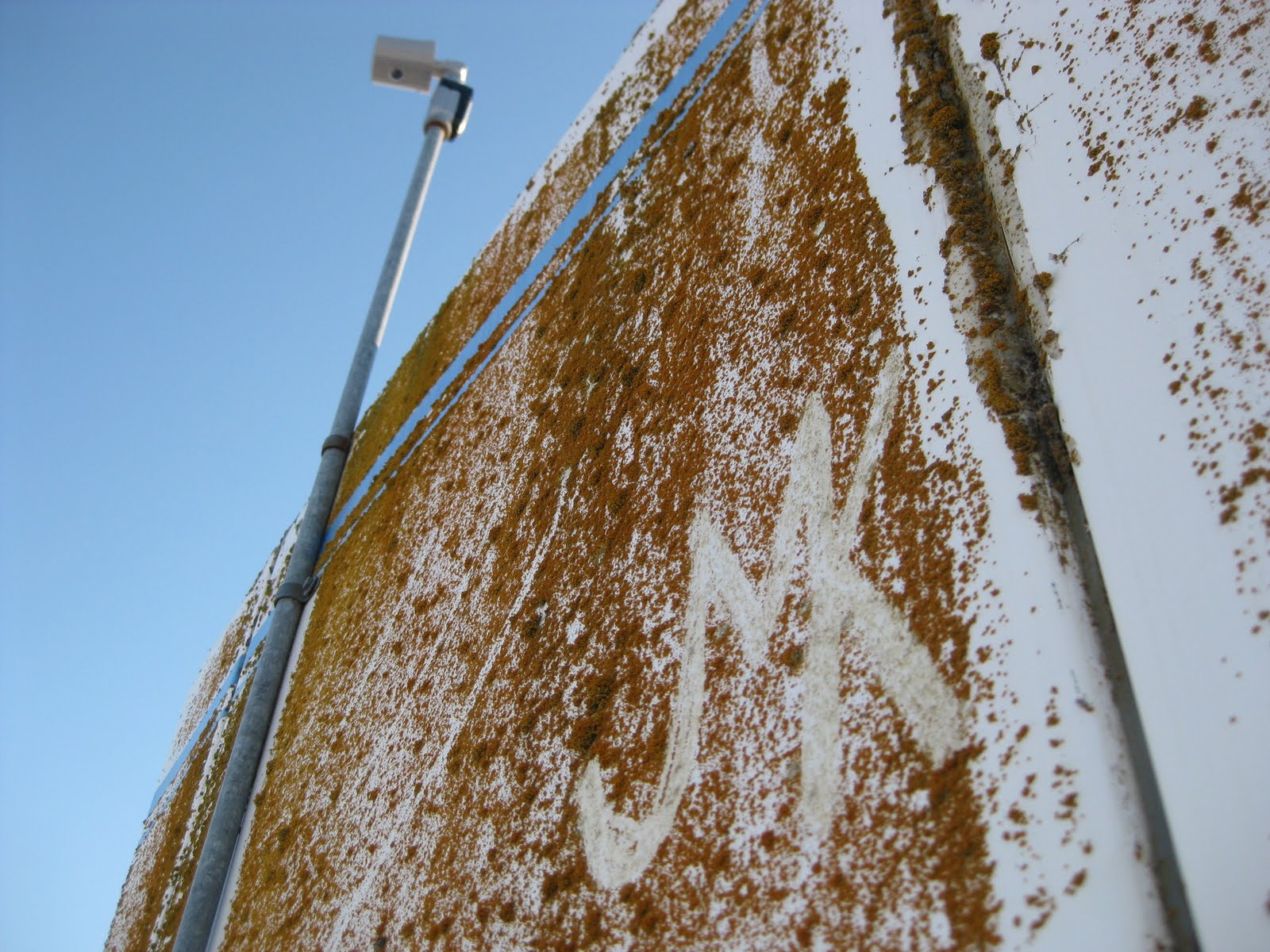
Mold on the small building at the airport.

I noticed a thing that may be a security camera peering down as I rubbed my initials next to many others' onto the side.
Geese flying west.
When I came back by this pond, I waited and
sure enough he came up out of the water.